How Storytelling Presentations Help Children Understand Multicultural Folktales
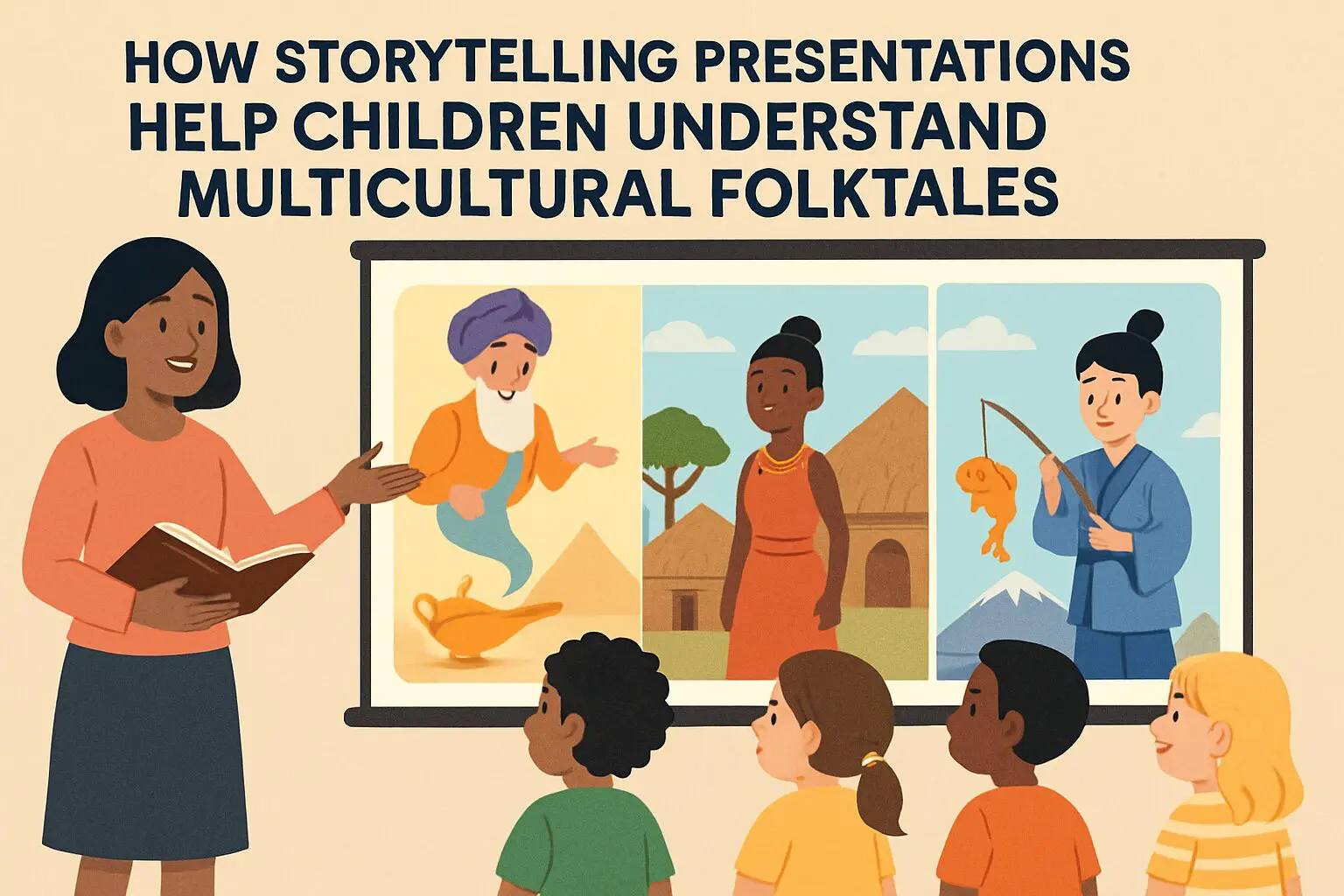
Storytelling is an age-old means of transferring knowledge, values, and cultural identity from one generation to another. For children, folktales are not just stories; they create spaces for young thinkers to experience empathy, imagination, and cultural sense-making. In today’s classrooms and homes, educators can leverage digital tools for storytelling that is meaningful, active, and engaging. One of the most powerful ways to do this is through visual presentation technology.
Why Children Learn Better Through Visual Presentations
Children often learn more effectively when stories and concepts are presented with visuals, particularly when it is in reference to an unfamiliar culture, or when the concept presented is abstract. Visuals allow for the distillation of a narrative into simplified scenes, characters, and essential plot elements.
Visuals offer additional:
Engagement: Pictures and visual slides help keep the child’s attention longer.
Clarification: Cultural cues, settings, and customs become a lot clearer.
Supports for multilingual learners: Visuals provide cues that promote language acquisition.
Retention: Children remember a story more deeply when they see it, not only hear it.
Both reinforce children’s knowledge of both a narrative and its cultural meaning if the educator enhances storytelling with slides, pictures, or some sort of visual aid.
Using Modern Tools to Support Storytelling
Nowadays, there are digital tools that make it possible to develop storytelling materials that are beautiful and age-appropriate, more easily than any other time in history. Teachers, librarians, and parents no longer need to have advanced design skills to prepare an engaging story presentation. Many now use creative platforms that allow them to create their own AI presentation, which allows them to revitalize traditional stories into engaging learning experiences.
These tools support educators with:
- Automatically creating simple layouts for child-friendly slides.
- Suggesting images that pair with characters, cultural settings, or the moral of the story.
- Making interpretations easy to edit ( for example, adding narration or potential discussion questions).
- Allowing educators to create similar presentations for a virtual or in-person class.
For stories that revolve around cultural practices or historical traditions, settings around a different culture, or multi-layered morals, a visual presentation can certainly be clearer, where students can see images visually that connect to the engagement of the lesson.
How to Build an Effective Story Presentation
Here are suggestions for educators developing a presentation for multicultural folktales:
1. Break down the Story into Scenes
The story should be broken down into 5-10 brief pieces—you could use an introduction, rising action, event, resolution, and moral if they are a part of the story. The children will find it easier to follow at that point when the story “continues” to the next piece.
2. Pick Images to Support Understanding
Use images that accurately represent the culture—clothing, backgrounds, animals, and symbols (parts of a culture where they exist). These images are helpful to students because they begin to understand the setting and practices.
3. Use Concise Text
For younger students, the use of bullet points with text in shorter sentences works best. Try to use vocabulary that assists students in understanding and eliminate possibly unnecessary vocabulary. If there is legislative vocabulary, use operational vocabulary within the story and meet best practice guidelines using definitions where appropriate.
4. Add Inquiry
Questions for the presentation, such as “What do you think is going to happen next?” or “What do you think made the character make this choice?” Just encourage kids to engage with the text before the reader simply reads, and facilitates a not the best educational activity.
5. Support Multilingual Classrooms
Add multilingual subtitles, audio recordings, or lists of vocabulary words for students who are working in different languages from the language of learning in a multilingual classroom.
Classroom and Home Activities Using Story Presentations
When the presentation is completed, it can be utilized for several engaging activities:
Story Retelling: Kids retell the story in their own words.
Cultural Comparison: Compare the two folktales, noting similarities and differences.
Creative Ending: Children suggest their own ending using a slide or drawing.
Group Presentation: Children work in small groups to retell the story via slides.
These activities build communication skills while also developing creativity and cultural understanding.
Conclusion
As teachers’ classrooms become more diverse, multicultural education becomes more important than ever. Storytelling presentations provide easy access for children to enter unfamiliar cultures, present moral lessons within the story, and develop empathy for characters within the story. Additionally, story presentations cater to different learning styles—visual, auditory, and kinesthetic.
Overall, educators create experiences that are both familiar and exciting for students by combining traditional folktales with modern-day visual tools. A mix of old and new preserves cultural stories and makes them more accessible to young learners.